Learn More
  View All
Espresso planet blog
How to Dial In an Espresso Grinder: A Complete Guide to Better Espresso
How to Dial In an Espresso Grinder: A Complete Guide to Better Espresso Extraction
Learn how to dial in an espresso grinder, adjust grind size, correct sour or bitter espresso, and achieve consistent espresso extraction every time.
Dialing in an espresso grinder is one of the most important steps in making great espresso. Even with high-quality coffee beans and an excellent espresso machine, the wrong grind setting can produce espresso that tastes sour, bitter, weak, harsh, or unbalanced.
The good news is that dialing in espresso does not have to be complicated.
By controlling a few key variables—especially grind size, coffee dose, extraction time, and yield—you can systematically adjust your espresso until you achieve a balanced, sweet and flavorful shot.
At Espresso Planet, we believe great espresso starts with understanding how your equipment and coffee work together.
What Does "Dialing In" an Espresso Grinder Mean?
Dialing in an espresso grinder means adjusting the grind size and other brewing variables until your espresso produces the desired extraction time, yield, and flavor.
The grinder controls how quickly water flows through the coffee puck. A small change in grind size can make a significant difference in extraction.
As a starting point for a typical double espresso, you can try:
-
Dose: 18 g of coffee
-
Yield: 36–40 g of espresso
-
Extraction time: approximately 25–30 seconds
-
Water temperature: approximately 90–94°C (194–201°F)
These are starting points—not rigid rules. Different coffees, roasting levels, baskets, machines and personal tastes may require different settings.
The Basic Espresso Dial-In Process
The key to dialing in espresso is consistency.
Keep your dose, tamping technique, coffee beans and brewing process consistent while making small adjustments to the grinder.

1. Start With Fresh Coffee
Use fresh, properly stored espresso beans.
Coffee freshness, roast level and origin can all influence how the coffee extracts. A new bag of coffee may require a completely different grinder setting than the previous bag.
Allow your grinder to stabilize after making a significant adjustment, and purge a small amount of coffee when appropriate.
2a. Choose a Starting Dose
Begin with the recommended dose for your espresso basket.
For example:
18 g in → approximately 36–40 g out
The important thing is not simply the number. The important thing is to use a consistent dose while dialing in.
2b. Grind the Coffee
Grind directly before brewing.
Espresso requires a relatively fine grind because the coffee puck needs to provide enough resistance to water.
Start with a reasonable espresso setting and make adjustments based on your extraction.
3. Distribute and Tamp Consistently
An even coffee bed is essential.
Distribute the grounds evenly throughout the basket and tamp level with consistent pressure.
Poor distribution can create channeling, where water finds weak points in the coffee puck and flows through unevenly.
This can produce an espresso that is simultaneously under-extracted and over-extracted.
4. Start the Extraction
Place the portafilter into the espresso machine and begin brewing.
Use a scale and timer whenever possible.
Record:
Dose → Time → Yield
For example:
18 g dose → 28 seconds → 38 g yield
This gives you a repeatable reference point for making adjustments.
5. Evaluate the results

6. Adjust and repeat
How to Adjust Espresso Grind Size
The most important rule when dialing in espresso is simple:
If the espresso is extracting too quickly, grind finer.
A finer grind creates greater resistance to water flow and generally increases extraction time.
If the espresso is extracting too slowly, grind coarser.
A coarser grind allows water to pass through the coffee puck more easily and generally decreases extraction time.
However, time alone does not determine whether an espresso tastes good.
Always taste the espresso.
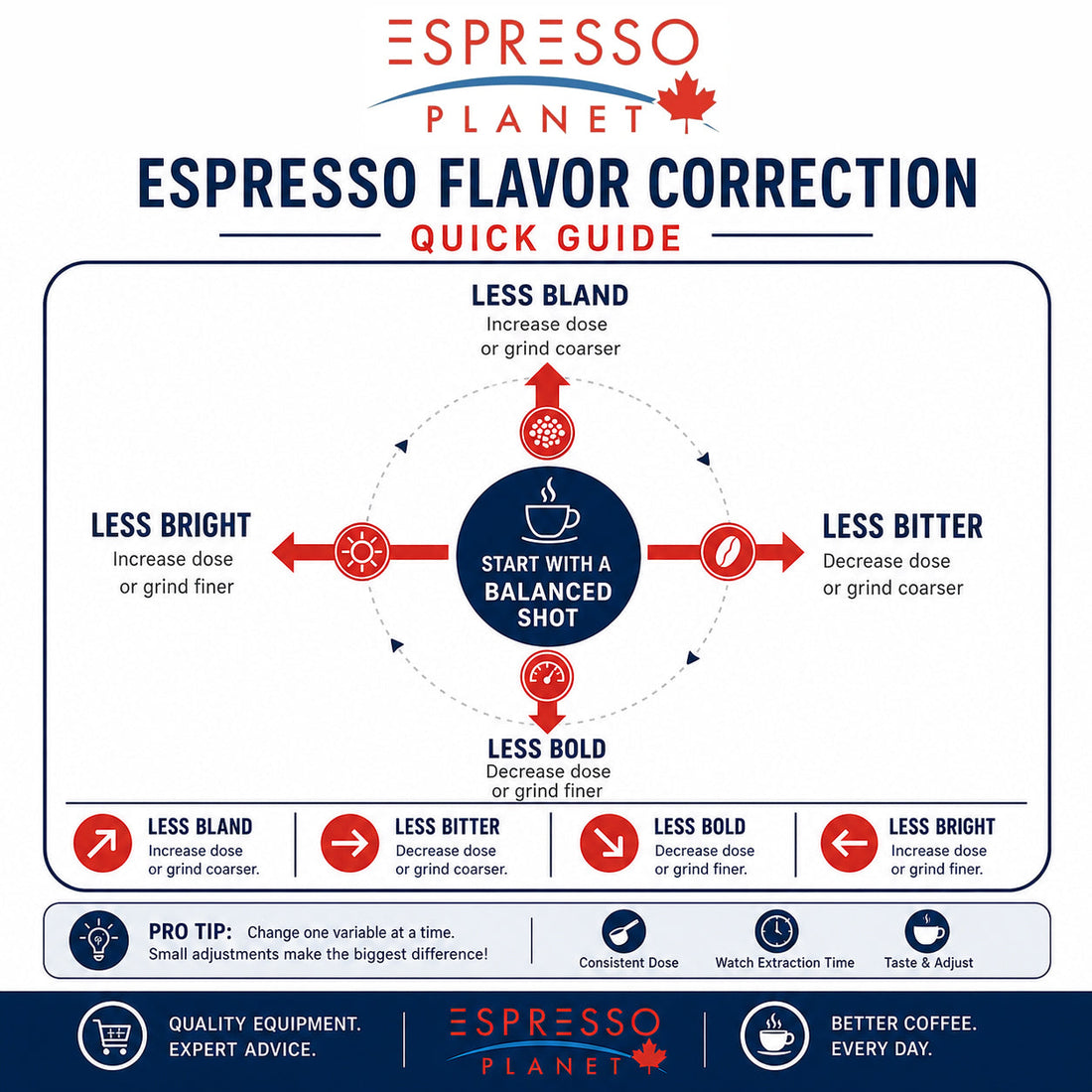
Why Does My Espresso Taste Sour?
If your espresso tastes sour, sharp, acidic or unpleasantly tart, it may be under-extracted.
A common first adjustment is:
Grind finer.
A finer grind can slow the flow of water and allow more extraction.
You can also consider:
-
Increasing extraction time
-
Increasing brew temperature when appropriate
-
Checking your dose and yield
-
Ensuring the coffee puck is evenly distributed
-
Checking for channeling
Keep in mind that some coffees naturally have bright, fruity acidity. Sourness is not always a problem—it depends on whether the acidity is balanced and pleasant.
Why Does My Espresso Taste Bitter?
If your espresso tastes bitter, harsh, dry or overly astringent, it may be over-extracted.
A common first adjustment is:
Grind coarser.
You can also evaluate:
-
Extraction time
-
Brew temperature
-
Dose
-
Yield
-
Coffee freshness
-
Roast level
Dark-roasted coffee can naturally produce more bitterness than lighter-roasted coffee, so the ideal extraction will depend on the beans.
Why Does My Espresso Taste Weak or Bland?
Weak, watery or bland espresso can have several causes.
Possible solutions include:
-
Check the coffee dose
-
Grind appropriately for espresso
-
Verify your yield
-
Check extraction time
-
Use fresher coffee
-
Make sure the coffee puck is evenly distributed
-
Check for channeling
If the shot tastes thin and lacks sweetness or body, increasing the dose or adjusting the grind may help.
What If My Espresso Tastes Too Bright?
Brightness is not necessarily a defect. Many specialty coffees naturally have citrus, berry or fruit characteristics.
However, if the espresso tastes excessively acidic or sharp, you may want to:
-
Grind slightly finer
-
Increase extraction
-
Review your brew temperature
-
Check your dose and yield
Taste the result after every adjustment.
What If My Espresso Tastes Too Bold or Heavy?
If your espresso tastes excessively heavy, intense or overpowering, consider:
-
Reducing the dose
-
Adjusting the grind
-
Increasing yield
-
Evaluating the coffee's roast level
A smaller dose or slightly different extraction can help create a more balanced cup.
Espresso Grinder Dial-In Quick Reference
| Espresso Problem | Possible Adjustment |
|---|---|
| Shot runs too fast | Grind finer |
| Shot runs too slow | Grind coarser |
| Sour / sharp | Consider grinding finer |
| Bitter / harsh | Consider grinding coarser |
| Weak / bland | Check dose, grind and yield |
| Too bright / acidic | Consider finer grind or greater extraction |
| Too heavy / bold | Consider reducing dose or adjusting yield |
| Inconsistent shots | Check distribution, dose and grinder consistency |
Important: These recommendations are starting points. Always taste the espresso before deciding on the next adjustment.
The Most Important Rule: Change One Variable at a Time
One of the biggest mistakes when dialing in espresso is changing several things simultaneously.
For example, don't change:
-
Grind size
-
Dose
-
Temperature
-
Yield
-
Tamp pressure
all at once.
If you do, you won't know which change improved or damaged the espresso.
Instead:
Change one variable at a time.
Make a small grinder adjustment, pull another shot and taste it.
This creates a repeatable process and makes it much easier to understand your coffee.
How Much Should You Adjust an Espresso Grinder?
Make small adjustments.
Espresso grinders are extremely sensitive. Depending on the grinder, a small movement of the adjustment dial can significantly change extraction time.
If your shot is only slightly too fast, make a small adjustment rather than dramatically changing the grind.
After adjusting the grinder:
-
Purge or discard enough coffee to ensure the new setting reaches the burrs.
-
Grind a fresh dose.
-
Maintain the same dose.
-
Tamp consistently.
-
Pull another shot.
-
Record the time and yield.
-
Taste the espresso.
Repeat until the flavor is balanced.
Why Espresso Extraction Time Matters
Extraction time is a useful diagnostic tool, but it should not be the only measure of a good espresso.
Two espresso shots can both extract in 28 seconds and taste completely different.
For example:
18 g → 38 g in 28 seconds
may taste excellent with one coffee but sour or bitter with another.
The goal is not to achieve a magic number.
The goal is to achieve balanced extraction and good flavor.
Use time, dose and yield as measurements—and use your palate to make the final decision.
Keep a Record of Your Espresso Settings
If you operate a home espresso setup, coffee shop, office coffee station or commercial espresso machine, recording your grinder settings can save significant time.
Record:
-
Coffee name
-
Roast date
-
Grinder setting
-
Dose
-
Extraction time
-
Espresso yield
-
Water temperature
-
Taste notes
When you open a new bag of coffee, you then have a starting reference.
Environmental conditions such as temperature and humidity can also affect espresso extraction, so you may need to make adjustments as conditions change.
When Should You Re-Dial Your Espresso Grinder?
You may need to re-dial your grinder when:
-
You change coffee beans
-
You change roast level
-
You open a new bag of coffee
-
The coffee ages
-
Room temperature or humidity changes significantly
-
Extraction time changes unexpectedly
-
Espresso flavor changes
-
Your grinder has been cleaned or serviced
-
You change the espresso machine or basket
If your espresso suddenly starts running much faster or slower than usual, don't immediately assume the espresso machine is defective.
The grinder and coffee may simply require a new dial-in.
Espresso Grinder Dial-In FAQ
What is the best grind size for espresso?
There is no single universal grind setting for espresso. Espresso generally requires a fine grind, but the correct setting depends on the coffee, grinder, dose, basket and espresso machine.
The correct grind is the one that produces the desired extraction and flavor.
Should espresso be ground finer or coarser?
If espresso is flowing too quickly, try grinding finer. If espresso is flowing too slowly, try grinding coarser.
Make small adjustments and taste the result.
Why is my espresso sour?
Sour espresso is often associated with under-extraction. Try grinding slightly finer and evaluate the extraction again. However, some coffees naturally have bright acidity, so taste is more important than extraction time alone.
Why is my espresso bitter?
Bitter espresso can be caused by over-extraction. Try grinding slightly coarser and evaluate the result. Roast level, water temperature and yield can also influence bitterness.
How long should an espresso shot take?
A useful starting point is approximately 25–30 seconds, but there is no universal perfect extraction time. Dose, yield, grind size and coffee characteristics all affect the ideal extraction.
How many grams of coffee should I use for a double espresso?
Approximately 18 g is a common starting point for a double-shot basket, but the appropriate dose depends on the basket and coffee. Always follow the basket manufacturer's recommended capacity where possible.
How much espresso should 18 g of coffee produce?
A common starting point is approximately 36–40 g of espresso, giving roughly a 1:2 to 1:2.2 brew ratio. Different coffees may perform better with different ratios.
Should I adjust the grinder or the dose first?
For most dial-in situations, keep the dose consistent and adjust the grind size first. This makes it easier to understand how your grinder affects extraction.
How often should I dial in my espresso grinder?
Dial in whenever you change coffee, roast, grinder conditions or other important brewing variables. Coffee can also change as it ages, requiring periodic adjustments.
The Espresso Planet Approach to Better Espresso
Great espresso is not about finding one perfect grinder setting and leaving it there forever.
It's about understanding the relationship between:
Grind Size + Dose + Yield + Time + Temperature + Coffee
Start with a balanced recipe, make one small adjustment at a time, and taste the result.
With a consistent process, dialing in an espresso grinder becomes much less complicated—and much more repeatable.
At Espresso Planet, we believe that better coffee comes from combining quality equipment with the knowledge to use it properly.
Quality Equipment. Expert Advice. Better Coffee.
Quick Espresso Dial-In Checklist
-
Use fresh espresso beans
-
Weigh your coffee dose
-
Grind immediately before brewing
-
Distribute the coffee evenly
-
Tamp consistently
-
Use a scale and timer
-
Record dose, time and yield
-
Taste every shot
-
Adjust one variable at a time
-
Make small grinder adjustments
-
Re-dial when changing coffee beans
-
Keep track of successful grinder settings
Looking for an espresso grinder, espresso machine, or expert advice on dialing in your coffee? At Espresso Planet and SupraMatic, we can help you choose equipment and develop a brewing setup that fits your coffee preferences and needs.
More Espresso and Coffee Dial In Resources:
https://www.coffeeforums.co.uk/tags/dialling-in-a-grinder/